Describe where water collects through Call Now and an independent provider serving the Corpus Christi area will answer.
Drainage basics that protect a foundation
- A sump pump and discharge line for basements with groundwater
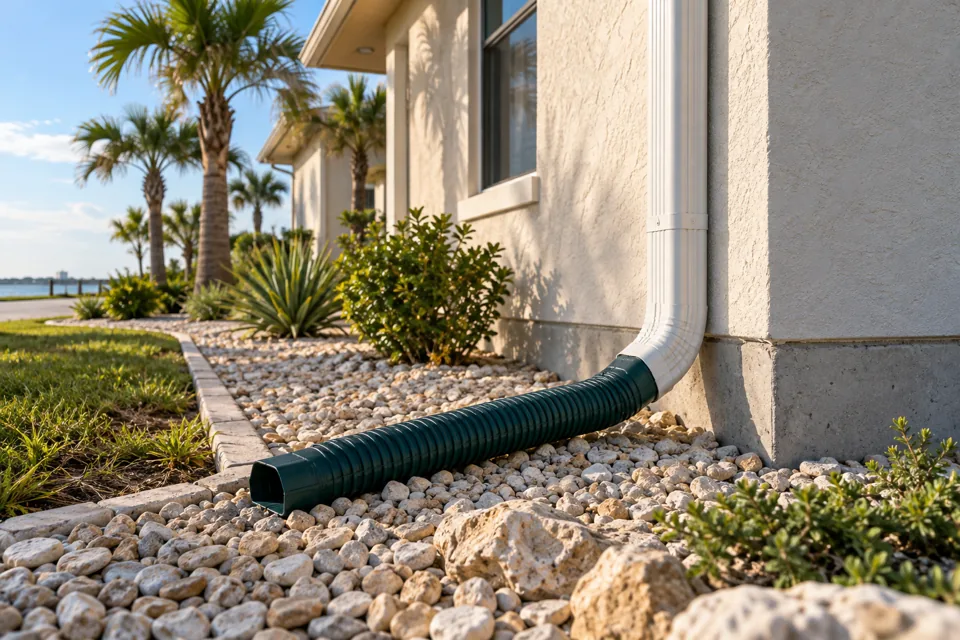
- Gutters that are clean and downspouts that discharge several feet from the foundation
- Window wells with drains and covers
- Ground that slopes away from the house, commonly about six inches over the first ten feet
- No planters, flower beds or irrigation that hold water against the wall
What a drainage assessment looks at
- Slope and low spots around the perimeter
- Trees and large plants close to the house
- Gutters, downspouts and splash blocks
- Basement or crawl space signs of seepage and efflorescence
- Irrigation and plumbing near the slab
Drainage systems compared
| System | What it does | Best for |
|---|---|---|
| French drain | A buried perforated pipe that collects and moves groundwater | Persistent wet areas and slopes |
| Sump pump | Collects water below the floor and pumps it out | Basements and crawl spaces with high water |
| Waterproofing and sealing | Seals walls and floors against seepage | Basement leaks after drainage is fixed |
| Gutter and downspout extensions | Carry roof water away | Nearly every house |
| Regrading | Reshapes soil to move water away | Low spots and flat grades near the house |
Clay soils and moisture
Foundations on clay soils move as soil moisture changes. Steady, moderate moisture limits the movement, whereas drought and flooding add to it, and drainage that avoids ponding together with soil that never dries out completely both help.
How a foundation visit works, step by step
Evidence comes first in a sound foundation assessment, and the repair proposal follows. Once you know that order, a diagnosis is easy to tell apart from a sales pitch.
- Interview: when you noticed the problem, what changed (drought, rain, plumbing leaks, remodeling) and where it shows.
- Exterior walk: cracks, gaps at windows and doors, brick and stucco condition, grading, gutters, downspouts, trees near the house.
- Interior check: sticking doors and windows, floor slopes, drywall cracks, gaps at trim and ceilings.
- Measurements: floor elevations with a manometer or laser, crack widths and patterns, photos with a scale.
- Cause: soil moisture, drainage, plumbing leaks, tree roots or construction issues, and which ones apply.
- Written findings: what is cosmetic, what is structural, what to monitor and what to repair, in order.
Questions to ask a foundation repair company
- How will you verify the result?
- What happens to landscaping, utilities and flooring during the work?
- What caused the movement, and how will you address the cause?
- Is the repair engineered, and can I see the design?
- What is the warranty, and is it transferable if I sell?
Safety and when an engineer should be involved
A structural engineer can evaluate movement independently of anyone selling a repair, and can design the repair. A report from an engineer is useful for a sale, an insurance claim or a large repair. Do not enter a crawl space or basement that has standing water or visible structural distress, and keep utility lines in mind before any digging.
Prepare your Corpus Christi home for the assessment
- Check gutters and downspouts and see where water goes near the foundation
- Take dated photos of cracks with a coin or ruler for scale
- Gather any earlier inspection reports, repair invoices and the home's construction year
- Look for leaks, wet spots and unusual water bills
- Note when doors started sticking and when cracks appeared
Mistakes that make foundation problems worse
- Repairing cracks cosmetically without finding the cause.
- Choosing a repair before getting measurements and a cause.
- Ignoring drainage. Water at the foundation is the most common driver of movement.
- Planting large trees too close to the foundation.
- Over-watering or letting soil dry out completely around a slab in clay soils.
What shapes the written scope
Neighboring houses can need very different foundation work. A written scope should state what was found and which of these factors applied.
- The foundation type: slab-on-grade, post-tension slab, pier and beam, basement or crawl space
- Drainage, grading, gutters and plumbing leaks that feed the problem
- Access for equipment, utilities and landscaping, and any permit or engineer requirements
- The soil, especially expansive clay, and how wet or dry it has been
- How much the structure has moved and where, from elevation readings
Foundation terms explained
- Underpinning: strengthening or deepening an existing foundation
- Hydrostatic pressure: pressure from water in saturated soil
- Slab-on-grade: a concrete slab poured directly on the ground
- Differential settlement: uneven movement of one part of a foundation relative to another
- Pier: a column placed deep under the foundation to carry load on stable soil
- Elevation survey: measurements of floor heights to show movement
- Expansive clay: soil that swells when wet and shrinks when dry
Myths and facts
- Myth: you can skip an engineer. Fact: an independent opinion is useful for big repairs.
- Myth: a repair means the house will never move again. Fact: soil still changes, so drainage and monitoring matter.
- Myth: foundation problems come only from old age. Fact: water and soil are the main drivers.
- Myth: all cracks mean a failing foundation. Fact: many cracks are cosmetic.
- Myth: bigger piers are always better. Fact: the design depends on the load and the soil.
What makes foundation work different in Corpus Christi
Corpus Christi sits on the Gulf coast with clay soils that swell when wet and shrink in drought, and many homes are built on concrete slabs. Wet and dry cycles move the soil under a slab and can cause cracks, uneven floors and sticking doors.
Coastal storms and flooding saturate soil and can undermine foundations and drainage. A high water table and salt air affect concrete, rebar and plumbing. Ask the provider how these local conditions shape the diagnosis and the repair at your address.
Foundation drainage assessment across Corpus Christi and nearby cities
In Corpus Christi, Texas and nearby places such as Portland, Ingleside, Robstown, Flour Bluff and Aransas Pass, Foundation Repair Corpus Christi takes calls and requests, and every address is confirmed individually.
Use Call Now at the top of the page and describe the cracks, sticking doors or floor slopes. You will be connected with an independent foundation provider who confirms your address, inspects the property and puts the scope in writing.
Related help in Corpus Christi
If this is not quite your situation, these pages cover the neighboring questions: Foundation crack assessment; Slab foundation assessment; Foundation inspection; Signs and inspection: foundation repair. The service area list shows every nearby city and ZIP code covered.